The nonprofit world has a structural problem no product serves well. A need exists somewhere at real geographic resolution, and the capacity to meet it exists somewhere else, in an organisation, a funder, an expert, a government plan, but the two have no reliable way to find each other at the moment the work requires. Enterprise resource tools assume a company's shape and a company's budget. This sector has neither. Riot is built around the way it genuinely operates.
It began inside my work at Purple Borders, a facilitation initiative, and grew into a real build. The approach was the same one I bring to any ambiguous problem: start from how the people actually work, model that as a system, then write the code. It is live, on React, Vite and a Postgres data layer, with accounts, teams and automatic saving, built and iterated by me from the structure up.
01
A need, read at real resolution
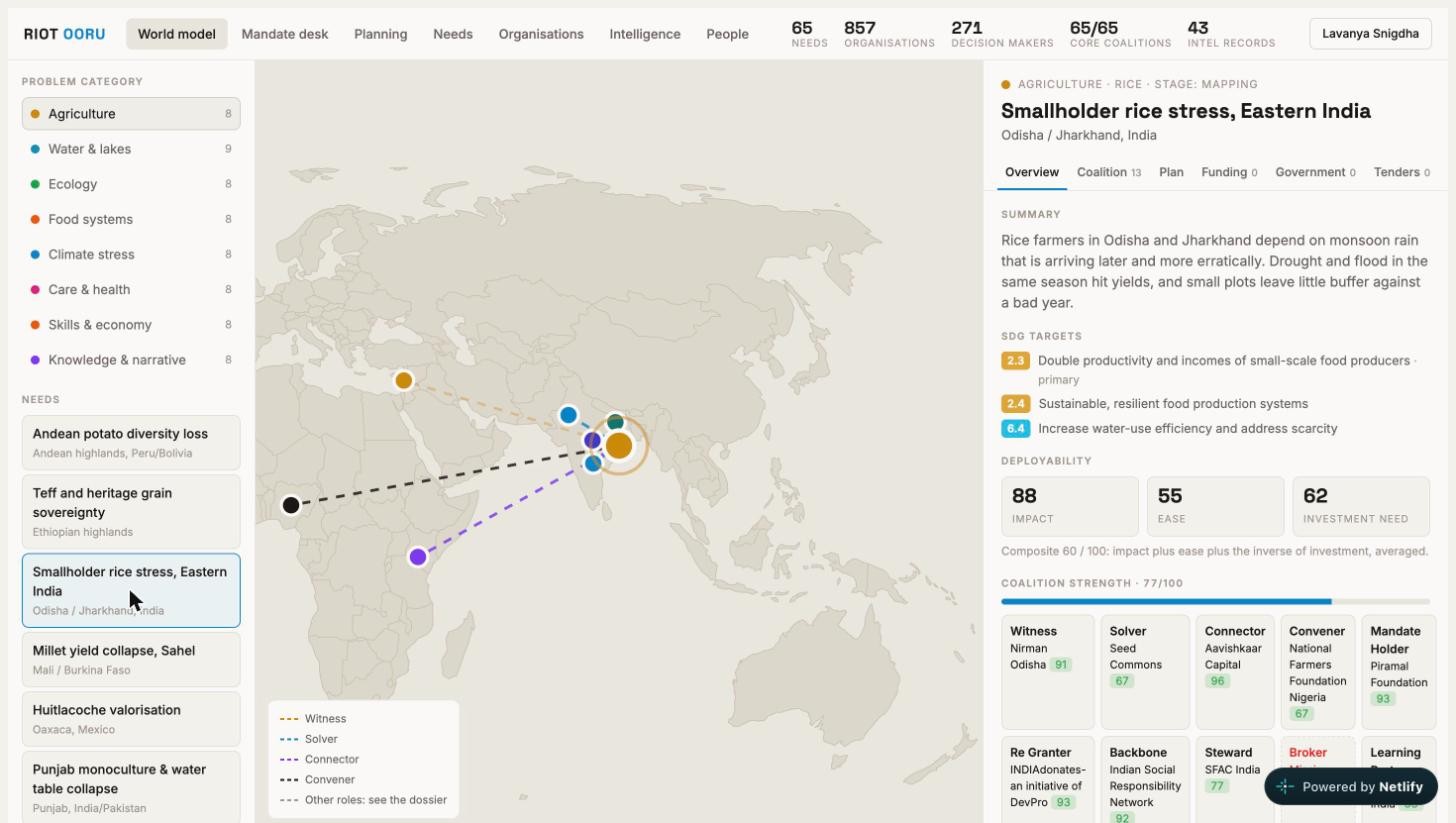
Every need sits at sub-national resolution with a summary, its SDG targets, and a deployability score built from impact, ease and investment need. The platform then assembles a coalition for it across ten roles, from the mandate holder and re-granter to the witness, solver, connector and steward, and scores how complete that coalition is. It is a directory turned into a considered reading of who can actually move the work.
02
Planning, from scoping to scale
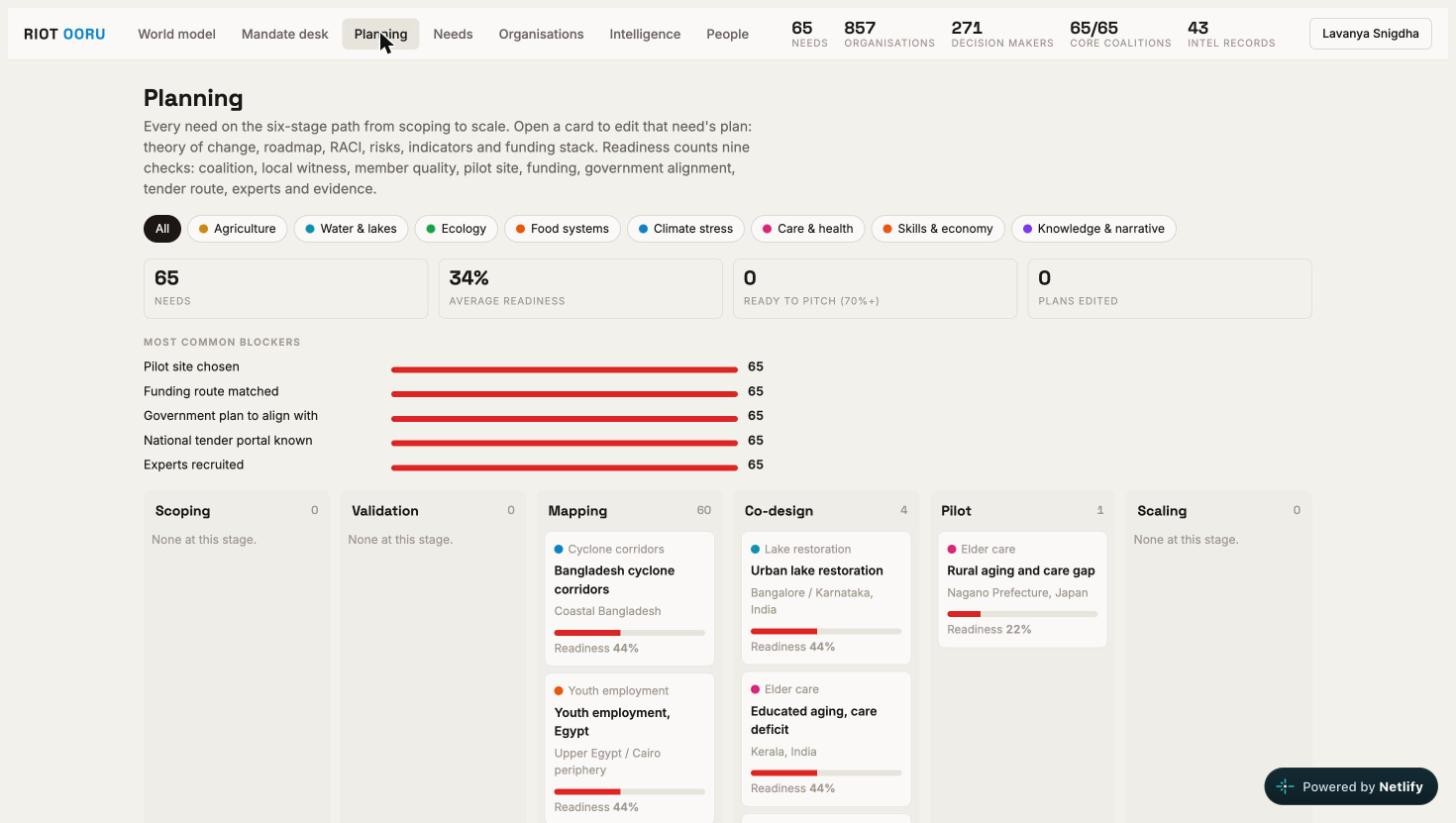
Each need runs a six-stage path, scoping, validation, mapping, co-design, pilot and scaling, with a readiness score that counts nine checks: coalition, local witness, member quality, pilot site, funding, government alignment, tender route, experts and evidence. The board shows the whole portfolio at once and surfaces the common blockers, so a team can see exactly what stands between a need and the money that would move it.
03
A desk for large mandate funding
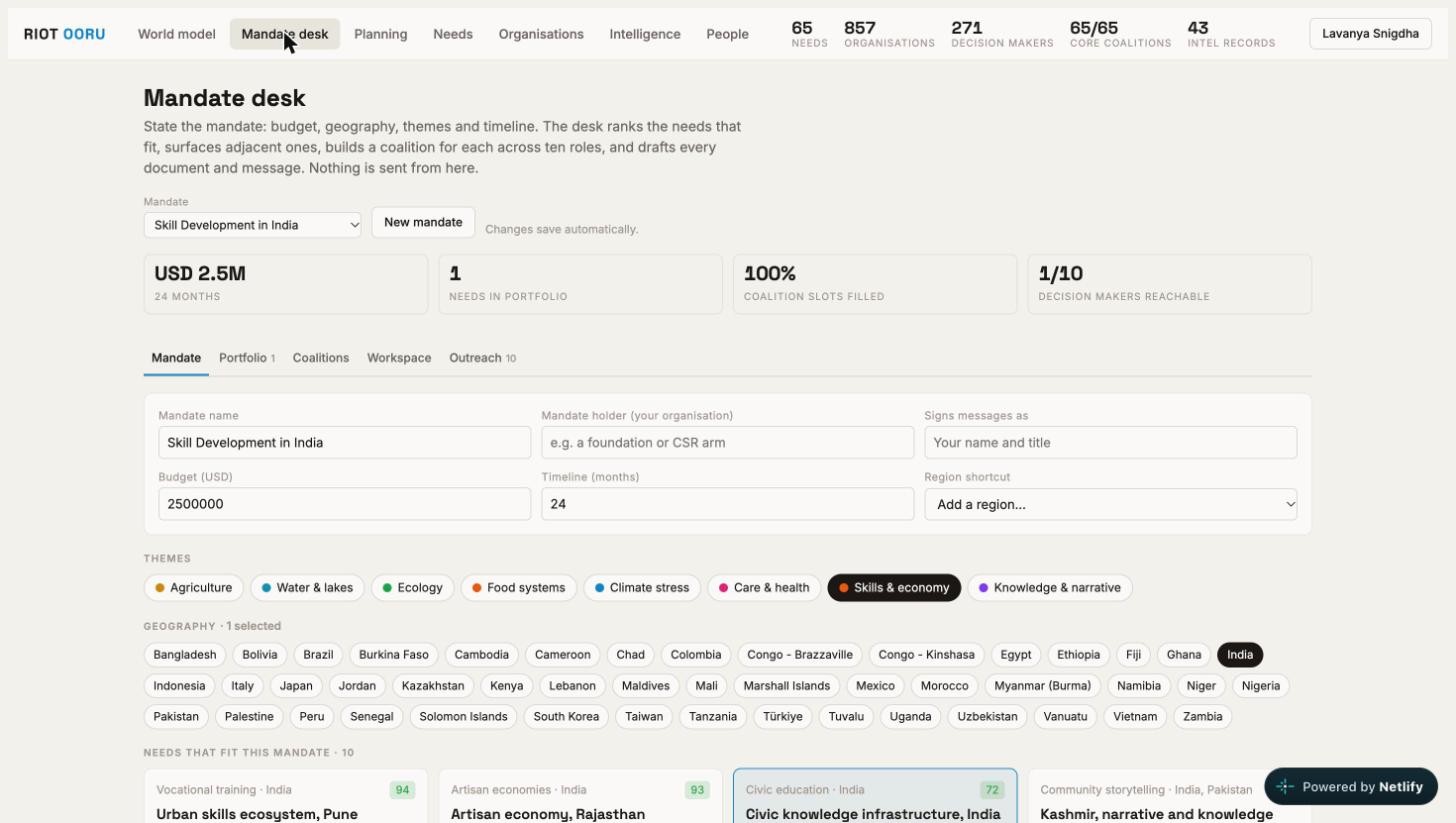
A funder states a mandate, a budget, a geography, themes and a timeline, and the desk ranks the needs that fit, surfaces adjacent ones, builds a coalition for each across the ten roles, and drafts every document and message the mandate needs. It is where the world model turns into a fundable portfolio, built for the people who hold a mandate and have to place it well.