First marketing hire on the GTM team at a Sequoia Scout and Alpha Fund-backed DevOps startup, building the 0-to-1 function from nothing. Over a year I ran four major programs, each with a target and a hard test attached. Here is how each one went.
Role
First GTM hire
Programs
4, from scratch
First client
A Unicorn
Raised
$5M seed
DevOps was a new world to me, all storage architecture and cloud orchestration, but it read like infrastructure Lego: complex circuit diagrams for how information travels and changes hands. Over my year at Lucidity I was handed four programs, each one a genuine 0-to-1 build. I ran them the way I run everything now: read the market first, prove the channel before scaling it, and document every experiment so the next one starts smarter.
01
Product positioning & digital presence
Day one came with three assignments: finish the AWS DevOps course, study our top three competitors, and produce a website. The positioning was the hard part. We did not yet know which G2 category we fell under, or whether one even existed that captured what we did.
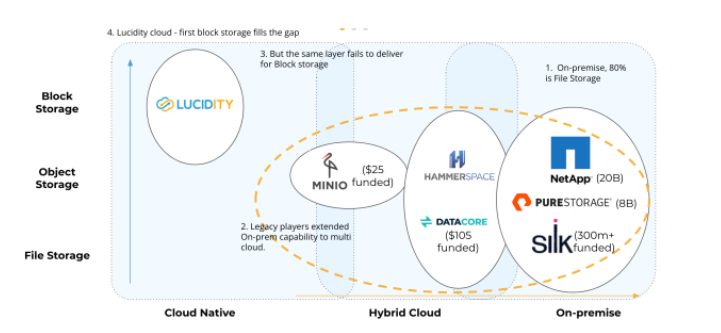
So we mapped every player in cloud orchestration, then narrowed into optimization tools for a specific storage type, then into tools that needed zero human involvement. Cross-referencing that with real SEO search terms and commercial intent, we found open ground: we could be the sole player in a very specific function for DevOps teams, the NoOps corner devs invoke when they get passionate about automating their own work.
Scoping the competitors meant knowing exactly how they spent their marketing dollars, which is where the patterns and our real advantages surfaced. From there I built a keyword strategy, mapped their content approach and our alternative search terms, and found a designer to design, animate, and develop the first site for a little over $500.
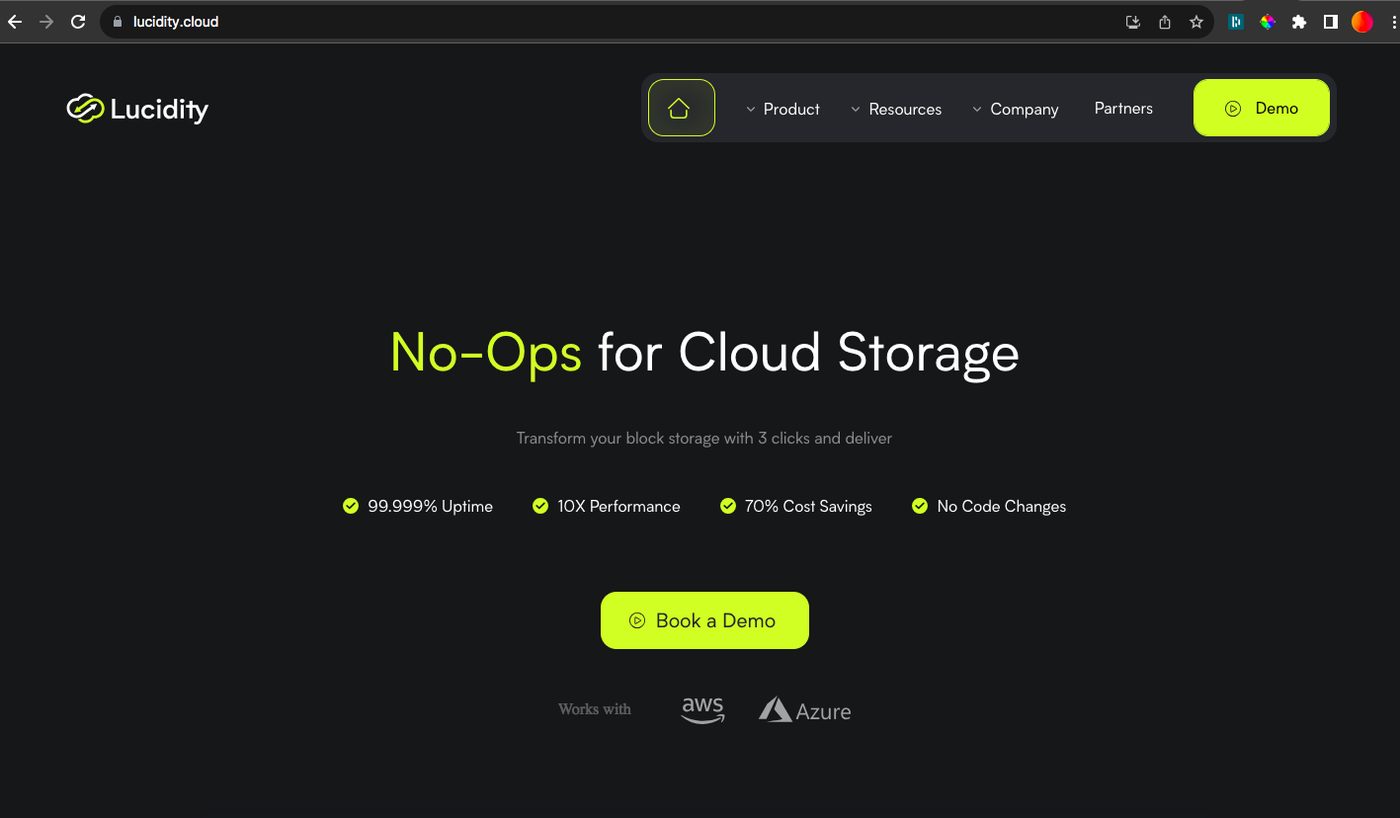
V2 of the site. The original value statement still works as a catch-all for what the suite does.We drew the competitive map to find the niche Lucidity could own.
Results
A clear positioning statement that still holds today
Closest competitors identified (Hammerspace, Zesty, PureStorage, and others)
A live website, designed and shipped in 14 days on a shoestring budget
02
Subject-matter expertise & early advocates
With a site to educate the market, the next question was cost-efficient awareness. If organic search was too slow a channel, what would bring in beta testers? The answer was a discovery phase built around three moves: identify beta testers from legacy orgs who would validate and publicly vouch for the product, build video decks and a customizable solution deck seeded with their testimonials, and turn the founders into visible SMEs on LinkedIn.
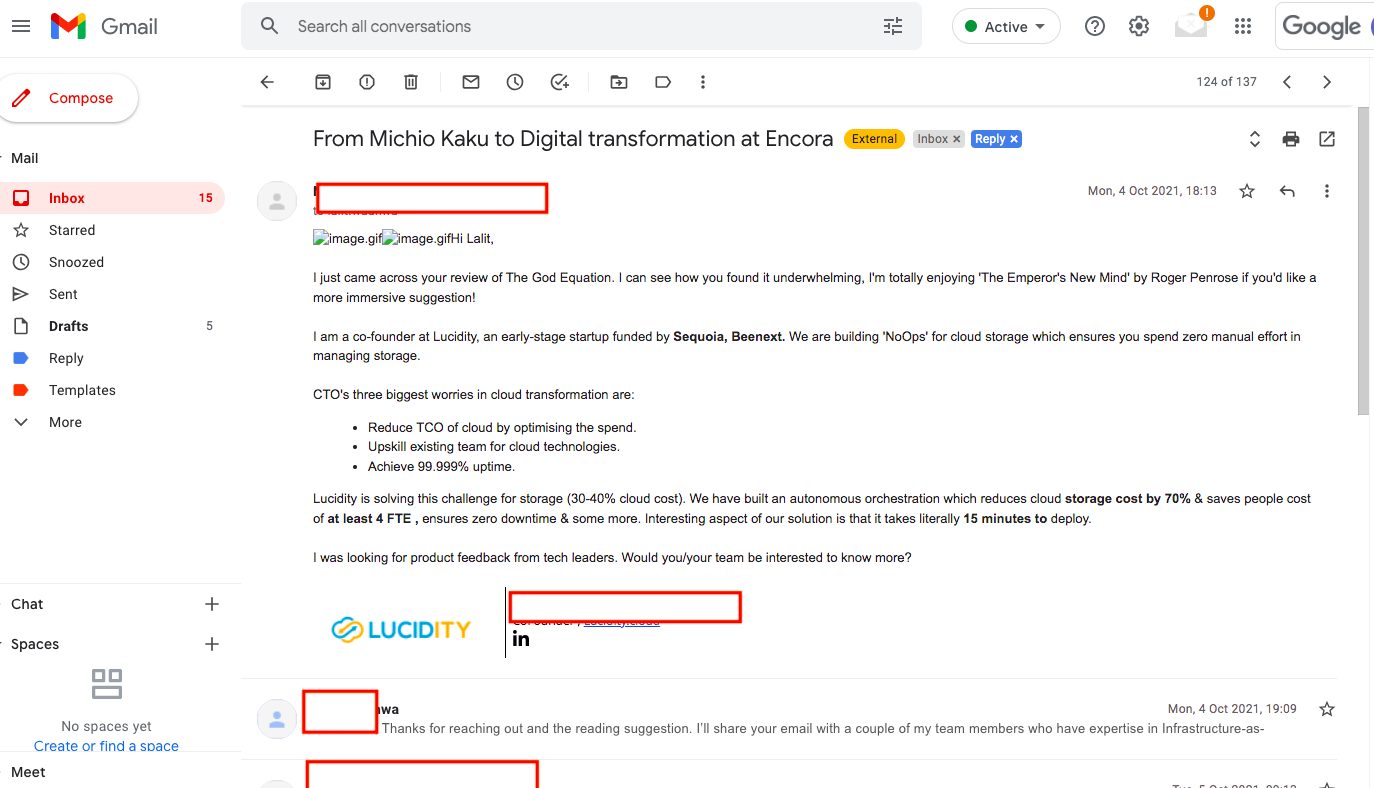
The LinkedIn play had a specific logic. We were the only company in the niche surfacing a problem with real-world implications, and people who understood the topic engage far more warmly with experts openly proposing solutions than with a brand pushing a product. So I added 50 relevant industry contacts a day with personalized notes, opening conversations about lending their expertise: expert articles, collaborations with the founders, feedback on the demo.
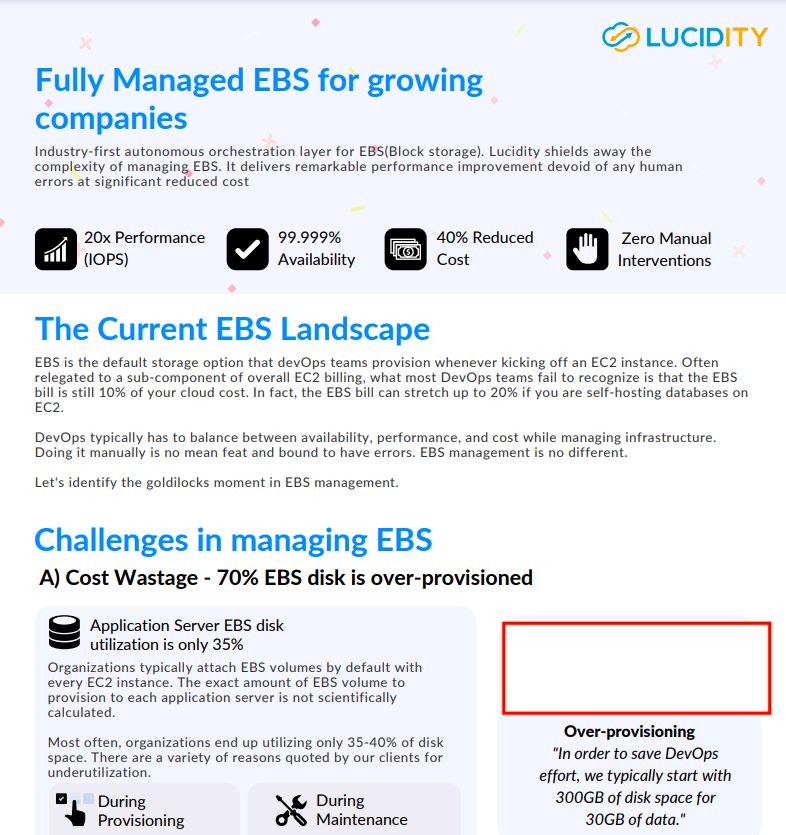
Snippets from the solution deck, built to be customized per account.
Results
Video testimonials from four senior DevOps leaders
Two video pitch decks, two video interviews, and an account-customizable solution deck
3,000+ professional contacts built, seven expert articles produced, and hundreds of DevOps leaders engaged, leading to a POC worth over $200k the next quarter
03
Investor deck & ABM outreach
With heavyweight names backing us, it was time to prepare for a funding round. My brief: identify the top 4,000 target logos for an ABM campaign as a test of cold outreach as a revenue channel, conceptualize and run that campaign, and design the investor data room and thesis. The specific goal was to generate $100k in POCs with zero paid spend.
After running the campaign myself for a few sprints, I built a blueprint for personalization and contact-gathering, nailed down the exact firmographic, technographic, and buyer profile, then handed the scaling to an external agency while I built the thesis and GTM documents.
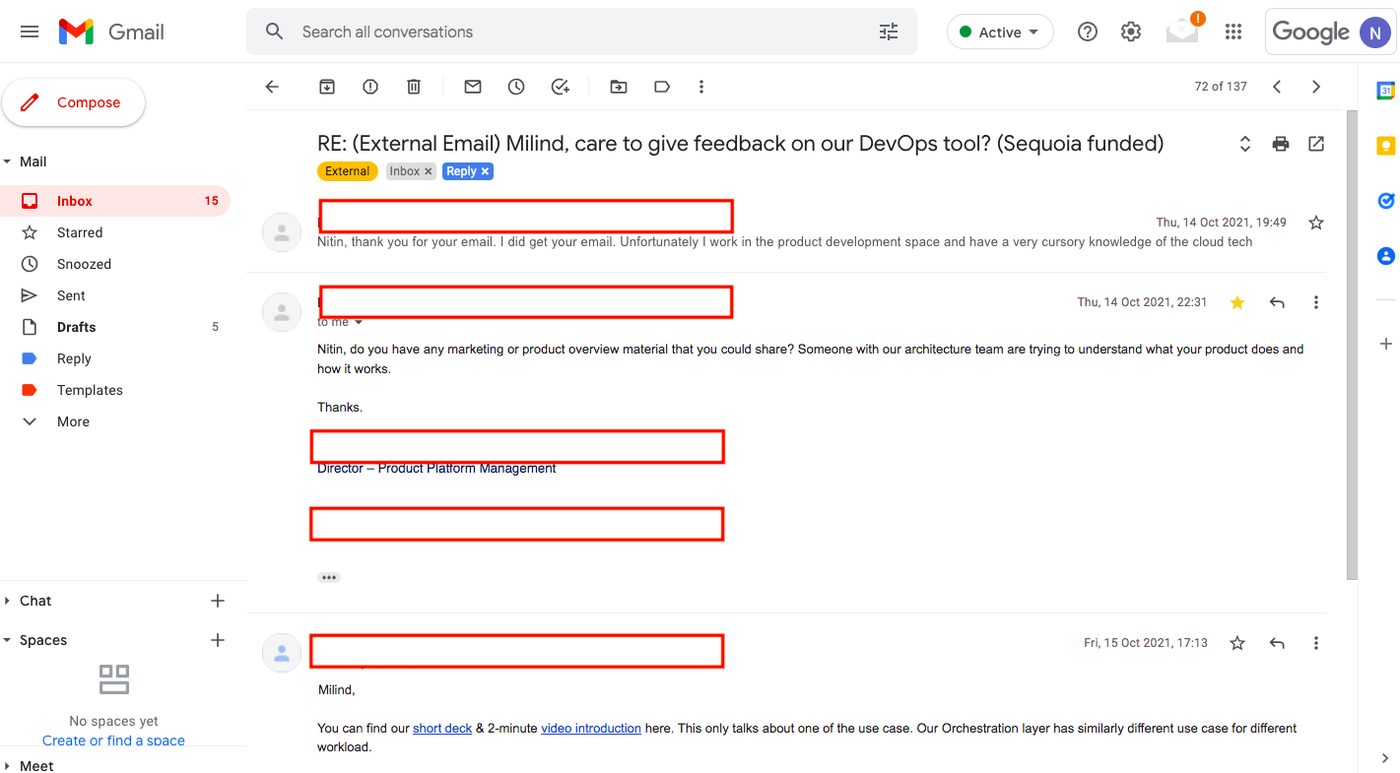
Samples of the personalized outreach.The ABM motion, targeted by technographics and persona.
Results
Targeting by technographics and persona opened doors at 35+ organizations in the first month, a 10–14% conversion ratio on 80–100 personalized emails a day
Identified the exact buying designations by polling relevant DevOps LinkedIn groups and reading who engaged
An investor data room shaped around a GTM motion that actually fit Lucidity
04
Paid or outbound?
The final challenge before my time ended was a clean experiment: run a LinkedIn paid-ads campaign and bring in $100k in revenue on no more than $5k of spend, use the outbound resources to find an enterprise channel partner with authority in the space, and settle the question of paid ads versus outbound once and for all.
I got the ads designed, the account set up, and the contact book built, then targeted our selected logos and designations with problem-aware material like the EBS storage guide, aiming to catch people who were problem-aware and actively seeking a solution. In parallel, I furnished existing LinkedIn connections with case studies from our early POCs to court a channel partner.
Results
Paid ads generated 2 MQLs and 1 SQL for nearly $1.5k, and the campaign was discontinued
One channel partner found through the LinkedIn network and onboarded to the GTM team
The verdict was clear: networking and outbound far outweighed paid ads on our budget
★
Key achievements & learnings
What it delivered
ICP identification, a found niche, and positioning that still holds
First believers won over, lending their professional expertise to pitch the tool wider
Purposeful email proven as a real revenue channel for core B2B SaaS
An investor deck and enablement material that landed the first VC round plus four Fortune 500 and Unicorn POCs
What I took from it
Teams running campaigns at scale rarely do the research to personalize, so scaled campaigns consistently underperform personal ones
Don't run LinkedIn ads without strong brand presence or on a tight budget
An investor thesis takes reading, rereading, and rewriting until you dream about it
Expect to fail, and document every part of the experiment as future material